

Table of Contents
- Kinetico Water Softener vs Electric: Key Differences
- How Non-Electric Water Softeners Work
- Non-Electric Water Softener Benefits You Should Know
- Cost of Water Softener Installation: Upfront vs Long-Term
- Water Softener Maintenance Requirements Compared
- Water Pressure and Flow Rate: What to Expect
- Which Water Softener Should You Choose?
- Frequently Asked Questions
Last Updated: September 7, 2026
Choosing between a Kinetico water softener vs electric models is one of the most common decisions homeowners face when tackling hard water. The core difference comes down to how each system regenerates: Kinetico units run on the pressure of your moving water, while electric models rely on timers or meters that require a power outlet. At Dooley’s Water, we’ve spent nearly two decades helping families in Kansas and Oklahoma compare these options.
Kinetico Water Softener vs Electric: Key Differences
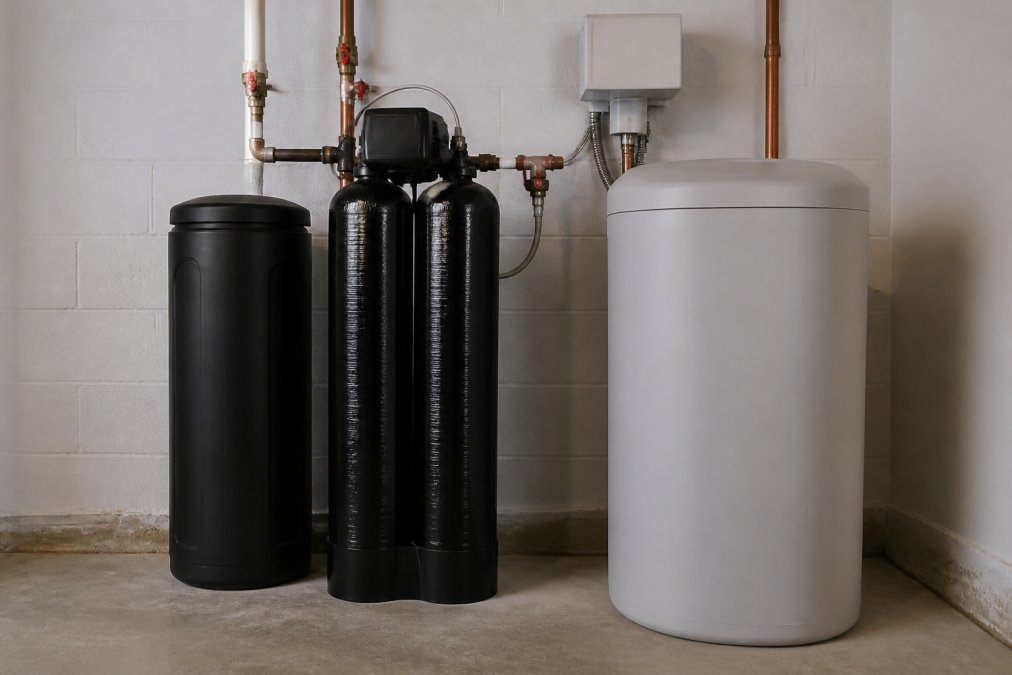
The most practical distinction between a Kinetico water softener and electric models is the regeneration trigger. Electric softeners typically regenerate on a timer or metered schedule, consuming salt and water even when your household isn’t using much. Kinetico systems operate on demand, regenerating only when the resin bed is exhausted, which improves salt efficiency and reduces water waste.
Electric units need a nearby outlet and a control head with moving electronic parts. Kinetico units use a mechanical valve powered by the flow of water through the system. A Kinetico water softener maintains more consistent softened water because it never regenerates at an inconvenient time.
How Non-Electric Water Softeners Work
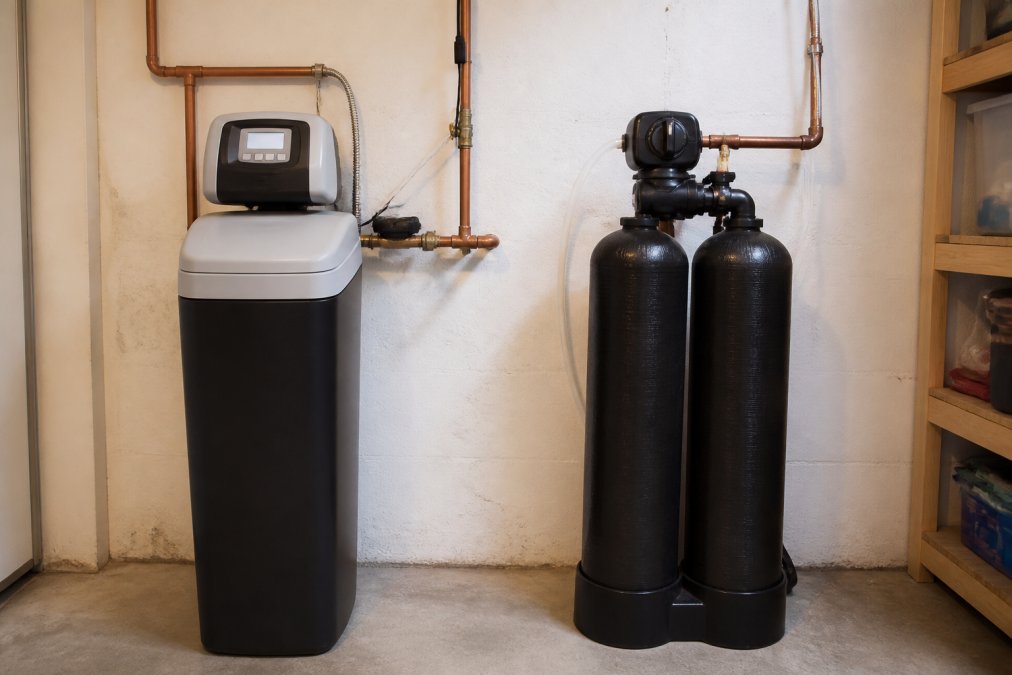
Non-electric water softeners use the kinetic energy of your home’s water flow to drive the regeneration cycle. As water moves through the turbine, it powers a mechanical counter that tracks how much water has been treated. When the preset volume is reached, the system shifts into regeneration without any electricity.
This design relies on the same ion exchange process as electric units. Hard water passes through a resin bed containing sodium ions, which swap places with the calcium and magnesium that cause scale buildup. The brine tank holds the salt solution that recharges the resin during regeneration.
Because there are no electronic timers, a non-electric system has fewer components that can fail. The system regenerates only when needed, so you aren’t paying to soften water your household never used. For homes that experience power outages, a non-electric softener continues working and regenerating normally.
Non-Electric Water Softener Benefits You Should Know
The non-electric water softener benefits extend beyond skipping the power bill. Because regeneration is demand-initiated, most households use less salt and water over a year compared to timer-based electric models, lowering operational costs and reducing brine tank refills.
Energy consumption is another clear win. An electric softener draws power for its control board and timer, which is modest but constant. A non-electric system uses zero electricity, which matters for homeowners focused on reducing their environmental footprint. The U.S. Department of Energy guidance on home water treatment notes that reducing unnecessary energy consumption in home appliances contributes to overall household efficiency.
System reliability also tends to be higher with non-electric designs. There is no circuit board to short out, no timer motor to wear down, and no solenoid valve to stick.
Non-electric softeners regenerate only when the resin is exhausted, which cuts salt and water usage while eliminating electricity consumption entirely.
Cost of Water Softener Installation: Upfront vs Long-Term
The upfront price difference between a Kinetico water softener and an electric model is the first thing most buyers notice, but it is only a fraction of the financial picture. To make a fair comparison, model the total cost of ownership (TCO) over a realistic 10-year service life.
Here is a structured framework you can use to estimate your own 10-year costs.
| Cost Factor | Electric Model (Single-Tank) | Kinetico Non-Electric (Twin-Tank) |
|---|---|---|
| Purchase & Installation | $600 – $1,200 | $2,500 – $4,500 |
| Electricity (10 yrs) | $50 – $150 (control board + timer draw) | $0 |
| Salt (10 yrs) | $600 – $1,200 (timer-based, often wastes salt on low-usage days) | $400 – $800 (demand-initiated, only regenerates when resin is exhausted) |
| Water Waste (10 yrs) | $100 – $300 (scheduled regens regardless of need) | $50 – $150 (fewer regens per year) |
| Repairs / Parts (10 yrs) | $200 – $600 (circuit board, timer motor, solenoid valve are common failure points) | $100 – $300 (mechanical valve, minimal electronics) |
| Resin Replacement (once in 10-15 yrs) | $200 – $400 | $200 – $400 |
| Estimated 10-Year TCO | $1,750 – $3,850 | $3,250 – $6,150 |
What this table reveals: The electric model wins on sticker price, but the gap narrows significantly over a decade. The real differentiator is the predictability of operating costs. With an electric timer-based unit, salt and water consumption is tied to a schedule, not actual usage. A household of two that travels frequently will still regenerate on schedule, wasting salt and water. A Kinetico system only regenerates when the resin bed is exhausted.
The ‘why’ behind the price difference: The higher upfront cost of a Kinetico system reflects a twin-tank design with a second resin tank and a mechanical valve head machined to tighter tolerances. Electric systems achieve a lower price point with a single tank and a mass-produced electronic control head. You are paying for a simpler, more durable mechanism and the redundancy of a second tank.
A note on installation: Installation costs are often similar for both types if your plumbing is straightforward. If you need a new drain line, a dedicated outlet for an electric unit, or a bypass loop for a twin-tank system, those costs add $150 – $400 to the initial quote.
Do not compare sticker prices. Build a 10-year TCO model using your actual household water usage and local utility rates. The electric model is cheaper to buy; the non-electric model is cheaper to operate per gallon of softened water.
For a precise quote tailored to your water hardness and plumbing layout, contact Dooley’s Water for a free in-home water analysis. We will provide a line-item cost breakdown, not a single lump-sum number.
Water Softener Maintenance Requirements Compared
Maintenance is where the ownership experience diverges most sharply between a Kinetico water softener and an electric model. The difference is not just about what you do, it is about who can do it safely and when you need to call a professional.
What You Can DIY (Both System Types)
- Salt refills: This is the most frequent task. Check the brine tank monthly and keep the salt level above the water line. Use high-purity evaporated salt pellets to minimize insoluble buildup.
- Brine tank cleaning: Once a year, empty the tank, rinse out any sludge, and check the salt bridge (a hardened crust that forms above the water). Breaking a salt bridge is a simple DIY task.
- Visual leak checks: Look for drips around the valve head, bypass valve, and drain line connections every quarter.
What You Can DIY (Kinetico Only)
- Venturi nozzle cleaning: The venturi (the component that draws brine into the resin tank) can clog with debris or iron sediment. On a Kinetico system, this is a user-serviceable part. You can remove the nozzle and screen, soak them in white vinegar for 20 minutes, and reinstall them. This takes about 15 minutes and requires no special tools.
- Bypass valve operation: If you need to isolate the softener for plumbing work, the mechanical bypass valve is straightforward to operate without risking damage to electronics.
What Requires a Professional (Electric Models)
- Control board diagnostics: If the display shows an error code or the unit stops regenerating, diagnosing the circuit board requires a multimeter and manufacturer-specific knowledge. Replacing a board is a $150 – $300 part cost plus labor.
- Timer motor or solenoid replacement: These are internal components that fail over time. Accessing them requires disassembling the valve head, which risks breaking seals if done incorrectly.
- Regeneration schedule reprogramming: If you move to a new home with different water hardness, reprogramming the meter or timer settings is not always intuitive. A technician can set it correctly in minutes.
What Requires a Professional (Both Types)
- Resin bed replacement: The resin lasts 10-15 years, but if your water has high chlorine or iron, it can foul earlier. Replacing resin involves removing the tank, siphoning out the old media, and flushing the new resin, a messy job that most homeowners should not attempt.
- Full system inspection: Every 1-2 years, a professional should check the injector, draw line, and drain line flow rate. This catches issues like a slow brine draw that wastes salt without you noticing.
The Hidden Cost of Skipping Maintenance
A common failure pattern is letting the salt level drop below the water line in the brine tank. When this happens, the resin bed can compact and lose capacity, resulting in hard water breakthrough. The fix is often a full resin replacement, a $200 – $400 expense that could have been avoided with a $10 bag of salt.
Do not attempt to disassemble the main valve head on any softener without the manufacturer’s service manual. The valve body contains springs and seals that are easy to misalign, and a small mistake can cause a continuous water leak.
The Trust-Building Angle
A legitimate annual professional service for either system type should include: checking the brine draw cycle, verifying the regeneration frequency matches your water usage, testing the hardness of the output water, and inspecting the drain line for backpressure. If a dealer cannot tell you exactly what their service visit covers, ask for a written checklist before you pay.
Homeowners who are comfortable with basic DIY tasks (salt refills, nozzle cleaning) will find a Kinetico system easier to maintain independently. Those who prefer a “set it and forget it” approach may find that the lower upfront cost of an electric model is offset by more frequent professional service calls over its lifespan.
For Kinetico owners, Dooley’s Water offers a transparent annual maintenance service with a published checklist.
Water Pressure and Flow Rate: What to Expect
Water pressure and flow rate are where many homeowners notice the biggest practical difference. A single-tank electric softener restricts flow during regeneration because the resin bed is offline for roughly 60 to 90 minutes (energy.gov). If someone flushes a toilet or runs a washing machine during that window, they get hard water.
Twin-tank Kinetico systems avoid this entirely. Because the second tank takes over during regeneration, softened water flows continuously at your home’s normal pressure. This matters for larger households, homes with well pumps, and anyone who dislikes the sudden pressure drop that electric units cause.
Homes with high simultaneous water demand, such as families with multiple bathrooms and appliances running at once, benefit most from a twin-tank non-electric design.
For households with lower water usage, a single-tank electric model may be perfectly adequate. The pressure drop only occurs during regeneration, which you can schedule for times when the household is asleep or away. If you have a smaller home or a lower flow rate requirement, the upfront savings of an electric unit may outweigh the convenience of continuous softening.
Which Water Softener Should You Choose?
A Kinetico water softener is a strong choice for homeowners who plan to stay in their home for several years and want a system that saves salt, water, and electricity over time. The initial investment can lead to lower operational costs and fewer repairs. The twin-tank design also eliminates the pressure drop problem that plagues single-tank electric units.
Electric models make sense if your budget is tight upfront, your water usage is low, and you don’t mind scheduling regenerations around your daily routine. They are widely available and simpler to understand for many homeowners. However, ongoing electricity consumption and the higher likelihood of electronic component failure are real trade-offs.
Consider your total cost of ownership rather than just the sticker price. The Environmental Protection Agency overview of water efficiency highlights how reducing water waste benefits both household budgets and community resources. A demand-initiated, non-electric system aligns with that principle by using only the water and salt your home actually needs.
Choosing the right softener comes down to your priorities. A Kinetico water softener offers reliability, zero electricity use, and continuous softened water, while electric models may have a lower upfront price. Dooley’s Water is an authorized Kinetico dealer with nearly two decades of experience serving Kansas and Oklahoma. Schedule your free water analysis with Dooley’s Water and get a system recommendation tailored to your home’s actual water quality and usage.
Frequently Asked Questions
Which is better, an electric or non-electric water softener?
It depends on your priorities. Electric models usually have a lower upfront cost and offer more programmable regeneration settings. Non-electric systems like Kinetico regenerate based on actual water usage, so they never waste water or salt on a fixed schedule. They also keep working during power outages. For homeowners who want consistent softened water with minimal maintenance and lower lifetime operating costs, a non-electric Kinetico system is often the better long-term investment.
How does a non-electric water softener work?
A non-electric softener uses the flow of water through the system to power its internal turbine. That turbine drives the regeneration cycle, so the system only regenerates when it detects that the resin bed has softened a specific volume of water. This is called demand-initiated regeneration. Because there is no timer, the system never regenerates on a schedule when you are not using water, which saves salt and water compared to timer-based electric units.
Do non-electric water softeners save money on electricity?
Yes, they use zero electricity. An electric water softener typically plugs into a standard outlet and draws power for its control board and timer, though the amount is small. The larger savings with a non-electric system come from salt and water efficiency. Since regeneration is demand-initiated, the system only runs when needed, which can cut salt usage and wasted water during regeneration compared to a timer-based electric model that regenerates on a fixed schedule.
What is the expected lifespan of a Kinetico water softener vs. an electric model?
The resin bed in both types typically lasts 15 to 20 years. The simpler mechanical design of a Kinetico system can mean fewer electronic components to fail, which may contribute to its system longevity.